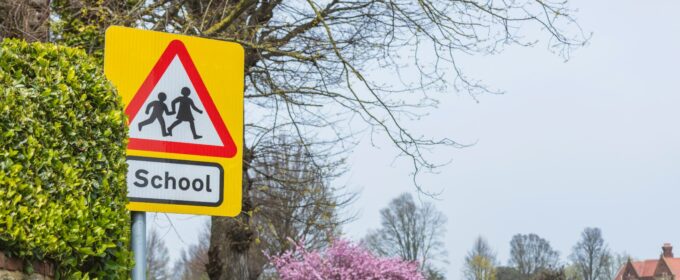


School Streets is a scheme where the road outside a school is closed to motorised traffic at drop-off and pick-up times to make it safer, healthier and more pleasant for residents and those using it. Currently, it is estimated there are approximately 1000 School Streets in operation in the UK, the vast majority of which (800) are in London. In early 2023, a trial of School Streets was initiated at seven primary schools across Manchester, with each school choosing how to implement it at their site. Research was conducted by a partnership including researchers from Tyndall Manchester to explore the impacts of the School Streets on nearby residents, an aspect which has largely been overlooked to date. In this article, Joel Gilbert and Dr Sarah Mander from Tyndall Manchester present their findings and what steps can be taken to improve the impact on residents.
- By reducing car traffic outside schools, School Streets can improve local air quality, road safety and increase physical activity of children and their carers.
- Some residents have expressed concerns relating to increased journey times; displacing rather than resolving traffic; and reduced access for visitors and service providers.
- These challenges can be resolved by local authorities taking the lead in designing and implementing the School Streets in partnership with schools and local communities.
What are School Streets?
The rise of School Streets in Britain is in part a response to the increasing use of cars to take children to and from school, especially among those attending primary school. As well as being more susceptible to the impacts of air pollution and collisions, children are also disproportionately affected by increasing car use as schools become pollution hotspots during drop-off and pick-up times. To address this, local authorities have started to introduce School Streets as a way to increase active school travel.
In May 2025, Transport for Greater Manchester (TfGM) launched a new School Travel Strategy, which aims for 70% of primary school students in Greater Manchester to walk, wheel, scoot, or cycle to school by 2030, and for 80% of secondary and further education students to use active travel or public transport. To support this TfGM aims to deliver 100 School Streets by 2028. However, how School Streets are implemented has, so far, varied significantly depending on the location of the school and who is conducting the implementation. This means the effectiveness of the schemes and their impact on local communities has also varied.
Manchester pilot
For the Manchester pilot, the local council introduced Temporary Traffic Regulation Orders (TTROs) on each of the roads outside the seven school entrances. These TTROs preceded the installation of signage showing the times the School Streets are in operation. Local residents were invited to respond to a consultation as part of the TTRO processand traffic enforcement officers were encouraged to visit the schools during hours of operation to support compliance. Beyond these steps, the schools were allowed to implement the School Streets as they saw fit and as far as resources allowed.
Implementation at the schools varied from informal arrangements where the School Street was marshalled by staff once a week; to the use of CCTV to monitor vehicle access; to the consistent application of diversion and closure signs with barriers and marshalling by volunteers. Leadership also varied with some schools leading the projects themselves, whilst others were led by groups including a community group, Parent Teacher Associations, and parent volunteers.
Residents’ response
Our findings showed that residents living close to the School Streets generally recognised them as being beneficial to the school communities they served, such as by improving children’s safety and promoting active travel. This was reflected in some residents’ own travel behaviour, with journeys made by active means increasing even outside of restricted times. However, concerns were also frequently raised by residents as to their detrimental impacts, such as the increased congestion on nearby roads; changes to driving routes and times; and local roads becoming more dangerous. Furthermore, residents also experienced difficulties with visitors arriving, including carers, taxi drivers and tradespeople, which disproportionately affected disabled people and others with care and support needs.
There was also wide variation in how the School Streets were viewed at each school. From the surveys and interviews conducted, the strength of this feeling was often linked to the practical implementation of the School Streets and who they were implemented by. For example, at one of the worst-faring schools, 38% of survey respondents viewed the School Street positively and 56% negatively. Implementation of this School Street was led by the school’s Parent Teachers Association (PTA) who, some residents claimed, had not properly consulted the local community beforehand. This largely negative perception was despite the PTA working to redress the situation after implementation and can be partly explained by a lack of support provided to the PTA during the consultation phase. In contrast, the school which had the most positive feedback (81% positive and 12% negative) was praised for the efforts it and partner organisation, WalkRide Greater Manchester, had made to engage with and respond to the local community’s concerns prior to the School Street’s implementation.
Making School Streets safer, healthier and more pleasant
We have three main recommendations for local authorities seeking to implement School Streets.
Communities should be consulted before and during the School Streets’ implementation. Local authorities should ensure residents near the School Streets are aware of their upcoming implementation, with opportunities to provide input. There should be opportunities for feedback during implementation so adjustments can be made. Consultation and implementation should be led by local authorities but be fully supported by the school. This might be in partnership with organisations, including Parents Teacher Associations, but not led by them. A model where schools apply for a School Street once they have shown a commitment to increasing active school travel, such as in Sheffield, might work in Manchester.
School Streets should be implemented consistently across schools. School Streets should be marshalled every day with a clear understanding of which vehicles are able to access during operation, with resident badges for display in car windscreens. Collaboration between local authorities and schools would ensure schools are able to provide marshals for operation of School Streets to reduce the reliance on parent volunteers, who are more likely to face burnout or have to change plans. Local authorities should ensure Traffic Enforcement Officers regularly visit School Street sites. This will reduce illegal and dangerous driving manoeuvres and parking, congestion, and thereby reducing the potential for collisions.
Local authorities should introduce School Streets alongside complementary measures. These should support the School Streets and ensure their benefits are widely felt. This includes working with local businesses, such as supermarkets, to use nearby parking facilities for ‘Park and Stride’ purposes; more pedestrian crossings; and including School Streets restrictions on wayfinding apps, such as Google Maps. We welcome the recognition School Streets are receiving in the draft GM Transport Strategy 2050 and its commitment to introduce them alongside a “Safer routes to School” programme. Local authorities should align their School Streets programmes with this strategy to better support children, parents and caregivers to travel more actively.